CREATIVE STRATEGY TEARDOWN

The AI Illusion: How Sunrise Village Solved the Cost Problem but Missed the Growth Psychology

A year of AI content and zero player backlash. The revenue flatlined anyway.

Why missing your audience's core psychology is the fastest way to drown in an oversaturated market.

By: Viktoria Cizikova · The Antidote Labs · 8 min read

IN THIS TEARDOWN

01

02

03

04

05

The Efficiency Trade-off: Why "nobody noticed the AI" is the wrong lesson here

Psychology vs. Demographics: Who this game's real player is - and what she's running from

Community Intelligence: What their own dying ads tell us about what players really want

Competitive Audit: The secret language category leaders use that Sunrise Village ignores

Strategy & Lessons: The missed opportunities and and what changed on June 4

The Efficiency Trade-off:

Why "nobody noticed the AI" is the wrong lesson here

Psychology vs. Demographics:

Who this game's real player is - and what she's running from

Community Intelligence:

What their own dying ads tell us about what players really want

Competitive Audit:

The secret language category leaders use that Sunrise Village ignores

Strategy & Lessons:

The missed opportunities and and what changed on June 4

nnoGames handed almost all of Sunrise Village to AI for a year - the

art, the quests, the levels, the story. They cut the team from around 25

people to 2-to-4 and moved the rest to a new game. The result? Nobody noticed. No backlash, no Reddit thread, no dip in the reviews. Their engineering lead was blunt: without the switch, the game would've been shut down.


As an operations move, it's a win. The problem is what it didn't fix.


Revenue is still down by roughly half from its peak - around $160–190k a month, per AppMagic. The game keeps the players it has; it just can't win new ones.

AI solved the cost problem. It never touched the growth problem.

And those aren't the same.


To be fair, that may have been the plan: you harvest a fading title, you don't fund its comeback. But it's also where most people read this story wrong. "Nobody noticed" gets taken as "players don't care about AI", so AI must be fine for growth. It isn't. Beyond the obvious public backlashes - like Marvel’s Secret Invasion intro or Disney’s AI partnerships - which undermine the player trust - this is not all there is to it.


A 2024 Science Advances study (Doshi & Hauser) found AI makes individual work better - more polished, rated more creative - but makes everything more alike.

AI raises the floor and flattens the roof.

nnoGames handed almost all of Sunrise Village to

AI for a year - the art, the quests, the levels, the story.

They cut the team from around 25 people to 2-to-4 and moved the rest to a new game. The result? Nobody noticed. No backlash, no Reddit thread, no dip in the reviews. Their engineering lead was blunt: without the switch, the game would've been shut down.


As an operations move, it's a win. The problem is what it didn't fix.


Revenue is still down by roughly half from its peak - around $160–190k a month, per AppMagic. The game keeps the players it has; it just can't win new ones.

AI solved the cost problem. It never touched the growth problem.

And those aren't the same.


To be fair, that may have been the plan: you harvest a fading title, you don't fund its comeback. But it's also where most people read this story wrong. "Nobody noticed" gets taken as "players don't care about AI", so AI must be fine for growth. It isn't. Beyond the obvious public backlashes - like Marvel’s Secret Invasion intro or Disney’s AI partnerships - which undermine the player trust - this is not all there is to it.


A 2024 Science Advances study (Doshi & Hauser) found AI makes individual work better - more polished, rated more creative - but makes everything more alike.

AI raises the floor and flattens the roof.

I

AI raises the floor and flattens the ROOF. And in an oversaturated scroll-feed, "more average" is just a quieter term for invisible.

I

By now we’ve uncovered two truths: AI content can definitely slash production costs (even when the output originality and ethics get questionable) AND AI-generated creative, on account of it being everywhere, can absolutely drive performance - when used correctly.


So, why did it fall flat here?


The issue wasn't the AI. Or at least not fully. It was the target and the way she was approached.
She isn't looking for a leaderboard; she's looking for an exhale. After a day of constant, high-pressure output, she needs a predictable, low-stakes world she can actually control. If the game stops being a refuge and begins to nag, it fails its only job: to be the one place where she doesn't have to perform.

And here's the sting: she's fleeing a world that feels increasingly machine-made - and Sunrise Village quietly replaced its human craft with the exact machine output she's running from. And even if AI can make it look good - it can't make it feel human, which is the only thing she came for.


When the focus shifted away from her core psychology, the game and its ads feel hollow. She simply moves on, left with a world that doesn’t seem to understand her.


Now that we know who she is, here's the twist - their own ad account already shows exactly what she responds to. They just keep burying it under spam.
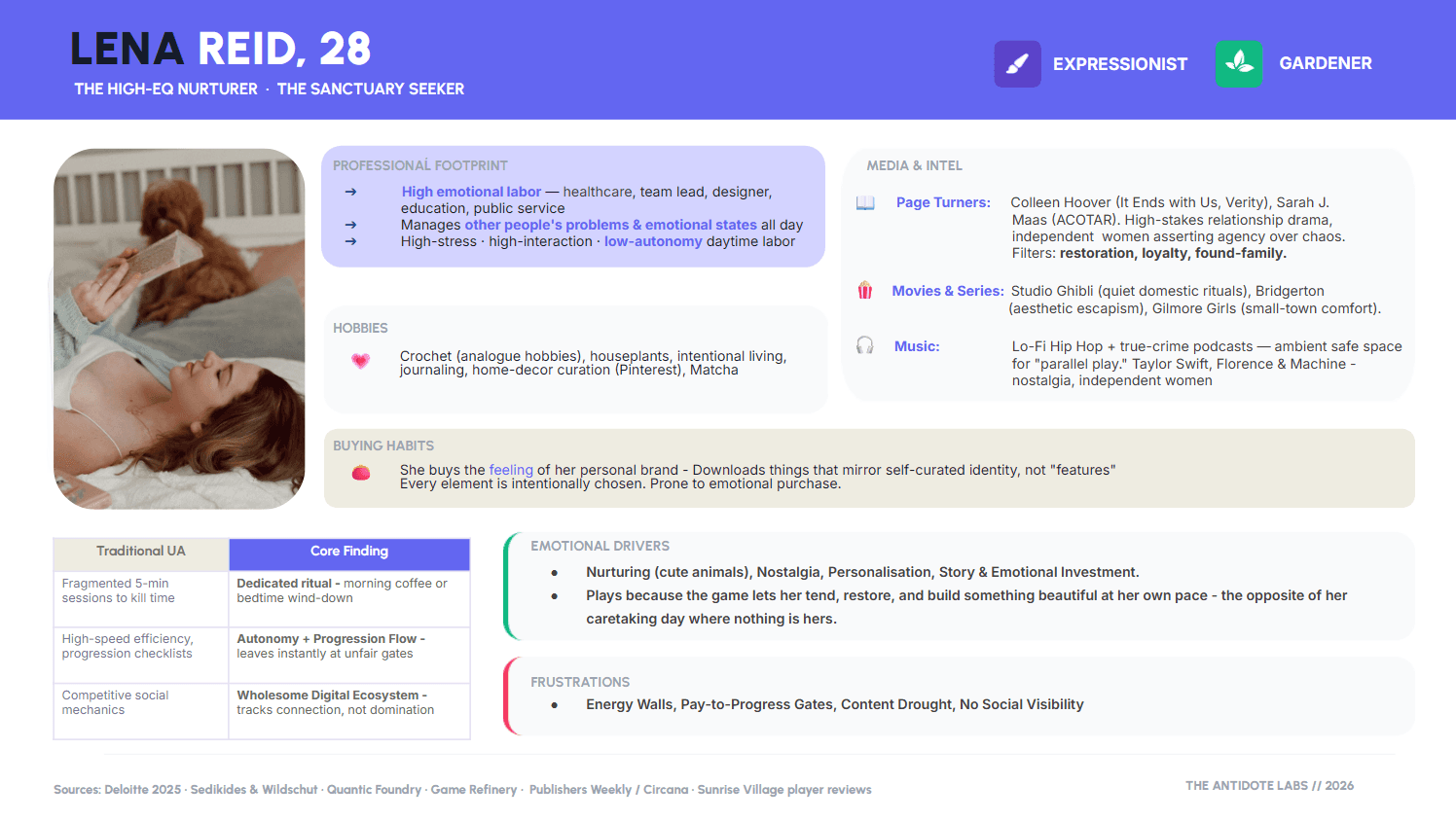
The media-buyer version of this player is "women, 25–34, casual." That's a targeting bracket, not a person. To market to her you have to fundamentally understand what makes her human - her fears, longings, goals. So who is she?


She works a high-emotional-labor job - healthcare support, team lead, teacher's aide, designer, public service - spending her day managing other people's problems and emotional states. By the time she's off the clock, she's carrying decision fatigue and a nervous system running hot. She doesn't play to kill time. She enters her leisure to aggressively decompress, reset, and regulate her cortisol.


She's burning out early. Stress that used to peak around 42 now peaks for her generation at about 25 (Newsweek). Deloitte's 2025 survey of 23,000+ found 40% of Gen Z feel stressed or anxious most or all of the time. The counter-move is everywhere: slow living, the "soft life," the refusal to treat exhaustion as a personality.


It's gone analog. As AI swallows the digital world, she's buying yarn and clay. Craft-kit sales rose 86% in 2025 and searches for beginner yarn kits jumped 1,200%; Michael's calls it a real cultural shift (CNN). People are choosing tactile, imperfect, human things specifically as a reaction to machines doing the thinking for them. Hold that thought.


For her, a cozy game isn't a difficulty setting - it's part of that identity, the ritual done with intention - sitting next to the crochet and the slow coffee, Lo-fi playlist in the background. Her worldview is shaped by Instagram mental-health, influencers fitting under various pop-cultures living her dream identity.


The psychology backs it: Quantic Foundry's data puts women's top two play motivations as Completion and Fantasy, and names a player type - the Gardener - who wants quiet, low-stakes task completion with no pressure to plan ahead.


Nostalgia is another powerful driver for this type of a player.

The Sedikides & Wildschut research shows nostalgia is triggered by loneliness, and it works - restoring a sense of connection, meaning, and continuity between who you were and who you are. One of the most reliable levers in advertising, for a reason.


The media-buyer version of this player is "women, 25–34, casual." That's a targeting bracket, not a person. To market to her you have to fundamentally understand what makes her human - her fears, longings, goals. So who is she?


She works a high-emotional-labor job - healthcare support, team lead, teacher's aide, designer, public service - spending her day managing other people's problems and emotional states. By the time she's off the clock, she's carrying decision fatigue and a nervous system running hot. She doesn't play to kill time. She enters her leisure to aggressively decompress, reset, and regulate her cortisol.


She's burning out early. Stress that used to peak around 42 now peaks for her generation at about 25 (Newsweek). Deloitte's 2025 survey of 23,000+ found 40% of Gen Z feel stressed or anxious most or all of the time. The counter-move is everywhere: slow living, the "soft life," the refusal to treat exhaustion as a personality.


It's gone analog. As AI swallows the digital world, she's buying yarn and clay. Craft-kit sales rose 86% in 2025 and searches for beginner yarn kits jumped 1,200%; Michael's calls it a real cultural shift (CNN). People are choosing tactile, imperfect, human things specifically as a reaction to machines doing the thinking for them. Hold that thought.


For her, a cozy game isn't a difficulty setting - it's part of that identity, the ritual done with intention - sitting next to the crochet and the slow coffee, Lo-fi playlist in the background. Her worldview is shaped by Instagram mental-health, influencers fitting under various pop-cultures living her dream identity.


The psychology backs it: Quantic Foundry's data puts women's top two play motivations as Completion and Fantasy, and names a player type - the Gardener - who wants quiet, low-stakes task completion with no pressure to plan ahead.


Nostalgia is another powerful driver for this type of a player.

The Sedikides & Wildschut research shows nostalgia is triggered by loneliness, and it works - restoring a sense of connection, meaning, and continuity between who you were and who you are. One of the most reliable levers in advertising, for a reason.


02 — The Player


Who she actually is

Meet the Sanctuary Seeker

Core Issues with their Organic Posts:

  • Chasing trends and cannibalizing their own hooks.

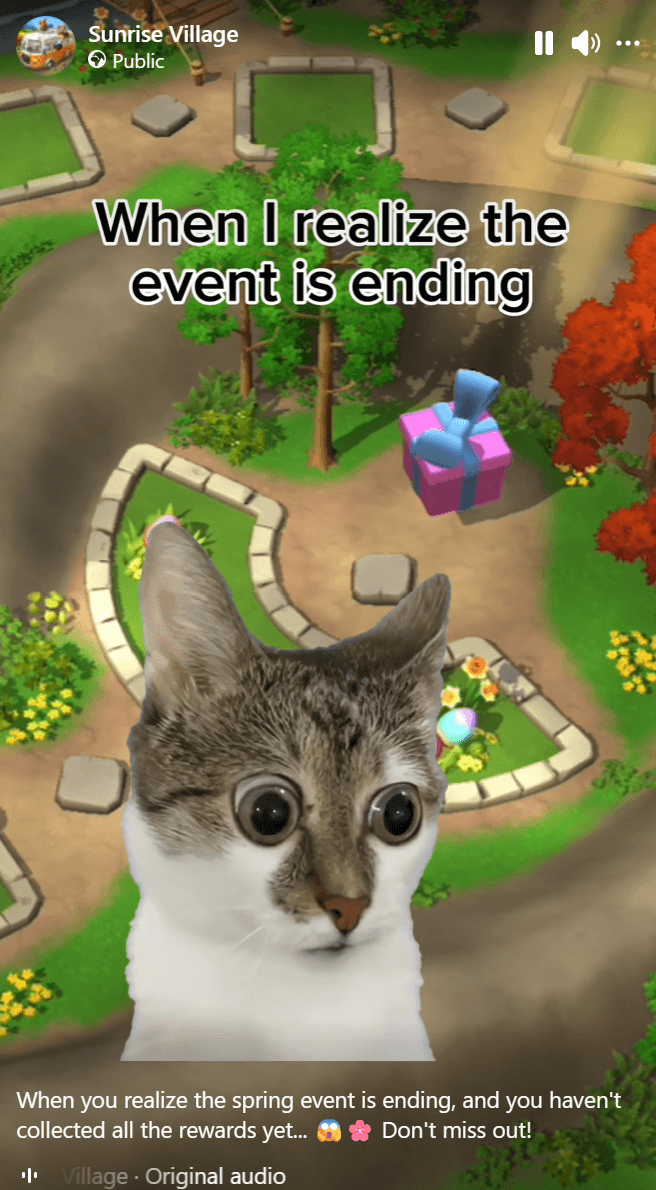
  • Using text that appeals to a Competition motivation or FOMO, completely missing the target mark - which a cute cat overlay won't fix.

  • No TikTok posts, despite it being the platform where the majority of their player base lives.

Core Issues with their Organic Posts:

  • Chasing trends and cannibalizing their own hooks.

  • Using text that appeals to a Competition motivation or FOMO, completely missing the target mark - which a cute cat overlay won't fix.

  • No TikTok posts, despite it being the platform where the majority of their player base lives.

Sort their Meta ads by impressions, then by what's still live, and a clean hierarchy falls out. One distinction first, because it changes everything: impressions tell you where they spent; active-versus-inactive tells you what they kept. An ad can rack up impressions and still get killed for weak returns. The real winners are the ones still running - ideally on a long flight.


By that test, their winners are unambiguous, and they're all emotional identity hooks:


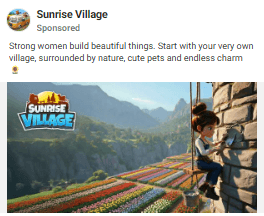
Every winner names a feeling she recognises - a simpler time, her own independence, a calmer nervous system. "Strong women build beautiful things" has run since April and keeps getting re-backed. The emotional angle has legs.


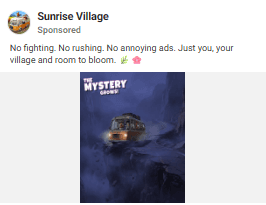
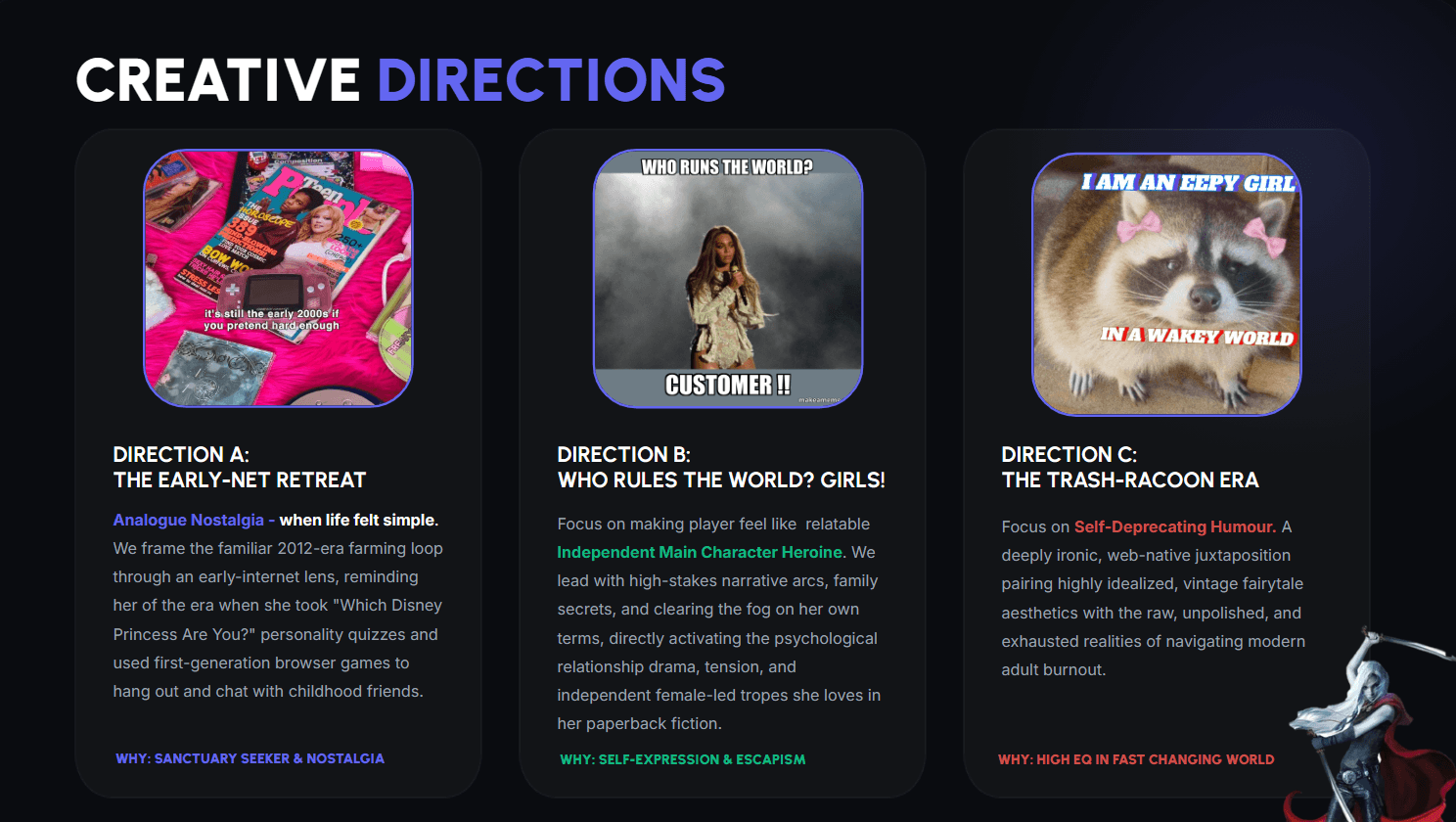
Now the part that actually matters. Their problem was never that they test too much or cut too fast — it's range, not volume. When you look at their ads, often it's one generic caption, "No fighting. No rushing. No annoying ads," re-skinned onto a rotating carousel of gimmicks: Grow Your Farm, Make New Friends, Build Your Community, Uncover the Mystery, Go On Adventures Together. Dozens of variations of the same shallow idea. Re-skinning a loser or a one-time winner isn't testing a new concept - it's the same concept in a new hat.


Real exploration tests genuinely different ideas: a narrative, a joke, a piece of UGC, an empowerment arc, a mystery told as a story instead of a dark stock image. That's what compounds installs and outruns fatigue. You don't beat creative fatigue by running one winner forever - you beat it by widening the space of concepts worth winning with. (They even tried mystery - "Uncover the Mystery," "The Mystery Grows" -but as a dark gimmick on the flat caption, so it died with the rest. The mystery was never the problem. The execution was.


Two more signals. Their organic Facebook is the same blind spot on another surface - recycled cat memes, "when the event is ending" countdowns, tag-a-friend bait, single-digit engagement. And almost all of it runs on Facebook, reaching the older end of their 25–65 target, while TikTok - where this player and this culture live - stays nearly empty. Not for lack of ability: Heroes of History, their other title, gets AI video on TikTok pulling six-figure views.


Every winner names a feeling she recognises - a simpler time, her own independence, a calmer nervous system. "Strong women build beautiful things" has run since April and keeps getting re-backed. The emotional angle has legs.


Now the part that actually matters. Their problem was never that they test too much or cut too fast — it's range, not volume. When you look at their ads, often it's one generic caption, "No fighting. No rushing. No annoying ads," re-skinned onto a rotating carousel of gimmicks: Grow Your Farm, Make New Friends, Build Your Community, Uncover the Mystery, Go On Adventures Together. Dozens of variations of the same shallow idea. Re-skinning a loser or a one-time winner isn't testing a new concept - it's the same concept in a new hat.


Real exploration tests genuinely different ideas: a narrative, a joke, a piece of UGC, an empowerment arc, a mystery told as a story instead of a dark stock image. That's what compounds installs and outruns fatigue. You don't beat creative fatigue by running one winner forever - you beat it by widening the space of concepts worth winning with. (They even tried mystery - "Uncover the Mystery," "The Mystery Grows" -but as a dark gimmick on the flat caption, so it died with the rest. The mystery was never the problem. The execution was.


Two more signals. Their organic Facebook is the same blind spot on another surface - recycled cat memes, "when the event is ending" countdowns, tag-a-friend bait, single-digit engagement. And almost all of it runs on Facebook, reaching the older end of their 25–65 target, while TikTok - where this player and this culture live - stays nearly empty. Not for lack of ability: Heroes of History, their other title, gets AI video on TikTok pulling six-figure views.


03 — The Evidence


Their own ad account tells the truth - Good words, weak craft

Their own ad account tells the truth -

Good words, weak craft

MOTIVATION

MOTIVATION

RUN-TIME

RUN-TIME

THE HOOK

THE HOOK

WHAT IT TELLS US

WHAT IT TELLS US

Nostalgia

active, many variants since Apr 25

active, many variants since Apr 25

their core winner

the empowerment arc converts

newer, climbing

re-skinned endlessly,

never stuck

re-skinned endlessly,

never stuck

Independence

active since Apr 22

active since Apr 22

active since May 21

active since May 21

"Remember when life felt simple"

"Remember when life felt simple"

"Strong women build beautiful things

… her secret escape"

"Strong women build beautiful things

… her secret escape"

"9 out of 10 women say

it's the most relaxing game"

"9 out of 10 women say

it's the most relaxing game"

"No fighting. No rushing.

No annoying ads."

"No fighting. No rushing.

No annoying ads."

Relaxation proof

Negation

spammed across dozens;

nearly all cut by mid-May

spammed across dozens;

nearly all cut by mid-May

Negation

Core Issues with their Organic Posts:

  • Chasing trends and cannibalizing their own hooks.

  • Using text that appeals to a Competition motivation or FOMO, completely missing the target mark - which a cute cat overlay won't fix.

  • No TikTok posts, despite it being the platform where the majority of their player base lives.

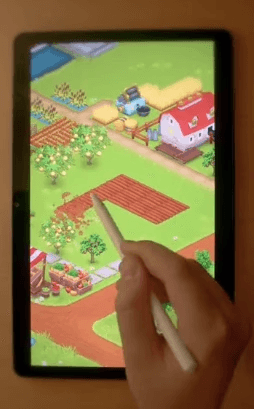
The leaders here stopped selling mechanics a long time ago. They sell an identity and a feeling. Hay Day can still run plain gameplay because they know who their player is and the psychology behind them, they know how to turn it into ASMR experience this player craves. They are the king of the farm simulator genre. Sunrise Village doesn't have that luxury - it's a shrinking challenger marketing itself like an incumbent, saying "look, you can harvest wheat."

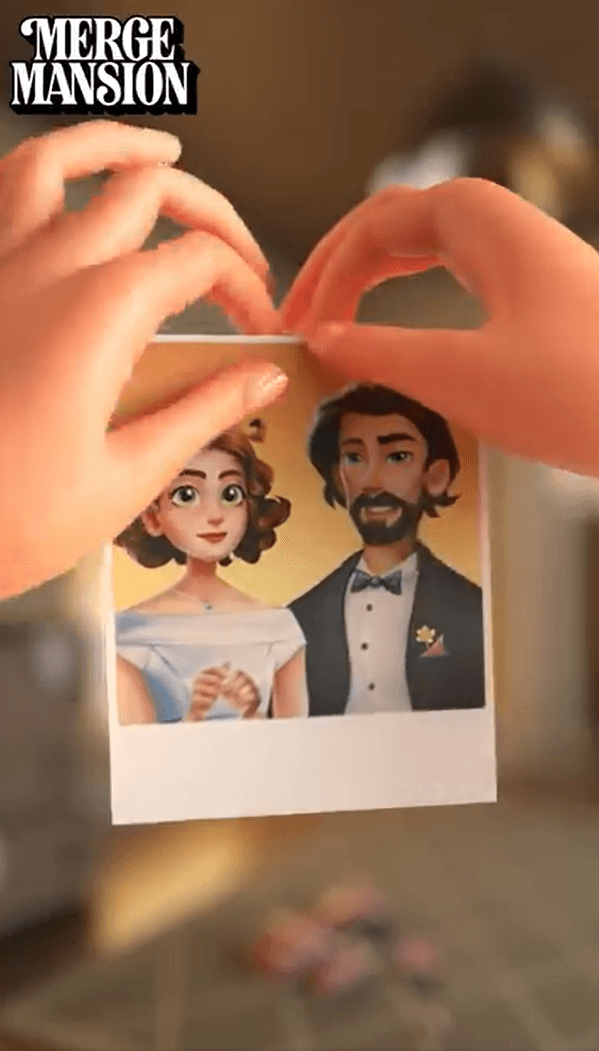
Then the one that should keep InnoGames up at night: Merge Mansion. It's a merge game, but its biggest ads barely show merging. They show a woman left at the altar, a family secret, a ruined house to restore - drama, story of an independent woman realising her worth, a mystery to dig up. The mechanic is demoted, the player psychology behind the motivation to install the game promoted.


This isn't a creative accident - it's the exact narrative arc our Sanctuary Seeker pays for across all her media. She reads Colleen Hoover and Sarah J. Maas specifically because they feature independent women asserting agency over chaos, building safe spaces from broken environments. Romance and romantasy accounted for seven of the top ten bestselling books of 2024 (Publishers Weekly / Circana). Merge Mansion sells the same story in a different medium. The parallel isn't clever

- it's inevitable.


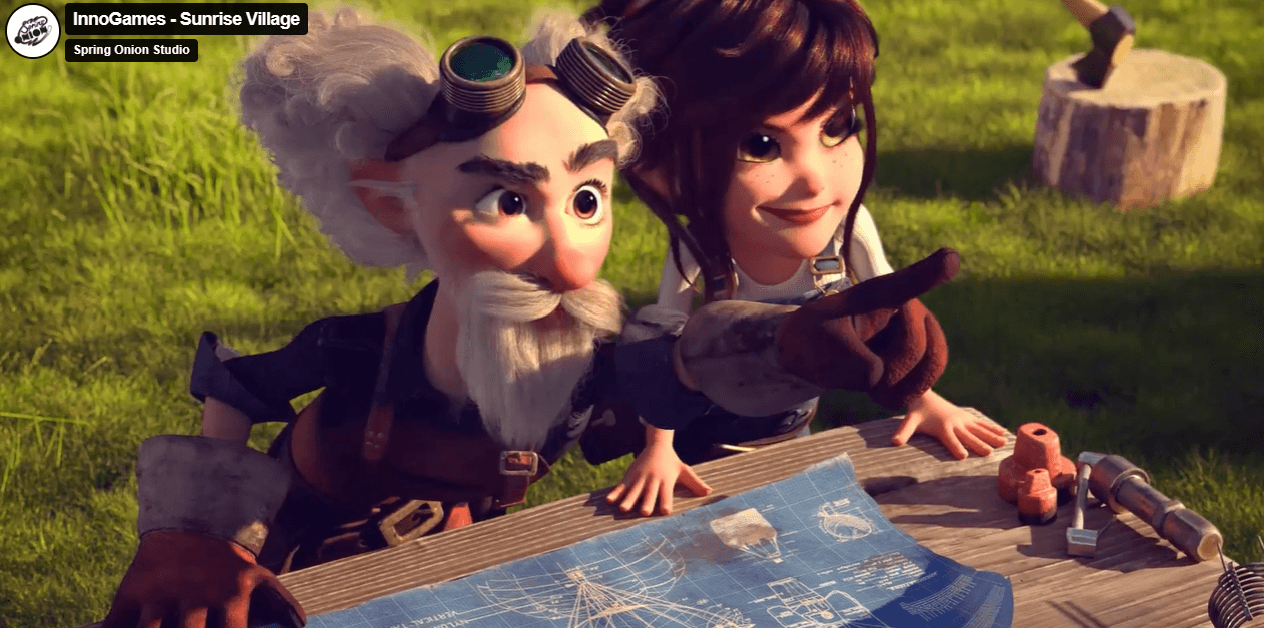
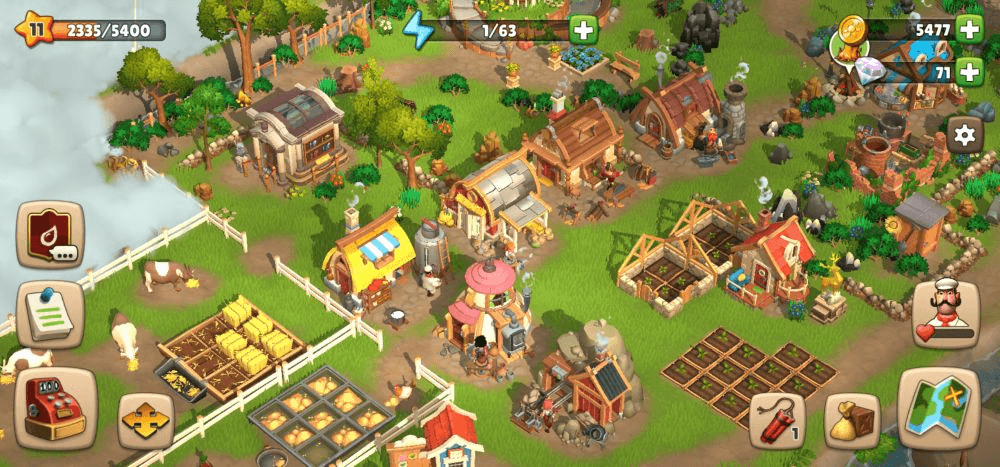
Now read Sunrise Village's actual premise: clear a mysterious fog, uncover the story of Grandpa Albert, bring a broken village back to life. That is the same structure that built Merge Mansion. InnoGames is sitting on a Merge-Mansion-shaped story and running 2012 farm-sim ads on top of it. Their own data already told them - the only creatives that survive are the ones that accidentally remember they have a mystery to sell.

Then the one that should keep InnoGames up at night: Merge Mansion. It's a merge game, but its biggest ads barely show merging. They show a woman left at the altar, a family secret, a ruined house to restore - drama, story of an independent woman realising her worth, a mystery to dig up. The mechanic is demoted, the player psychology behind the motivation to install the game promoted.


This isn't a creative accident - it's the exact narrative arc our Sanctuary Seeker pays for across all her media. She reads Colleen Hoover and Sarah J. Maas specifically because they feature independent women asserting agency over chaos, building safe spaces from broken environments. Romance and romantasy accounted for seven of the top ten bestselling books of 2024 (Publishers Weekly / Circana). Merge Mansion sells the same story in a different medium. The parallel isn't clever

- it's inevitable.


Now read Sunrise Village's actual premise: clear a mysterious fog, uncover the story of Grandpa Albert, bring a broken village back to life. That is the same structure that built Merge Mansion. InnoGames is sitting on a Merge-Mansion-shaped story and running 2012 farm-sim ads on top of it. Their own data already told them - the only creatives that survive are the ones that accidentally remember they have a mystery to sell.

04 — The Competition


The grammar everyone else is using - the success stories

The grammar everyone else is using -

The Success Stories

THE GAME

HOW

HOW

WHAT IT SELLS

Family Farm Adventure

appels to high EQ of player

through cute animals

opportunity to fix

appels to high EQ of player

through cute animals

opportunity to fix

gameplay staged on a pastel desk

with plushies and a mug

— you see yourself first

gameplay staged on a pastel desk

with plushies and a mug

— you see yourself first

Hay Day

physics-y crop piles;

a finger "painting" a field

— tactile, almost ASMR

physics-y crop piles;

a finger "painting" a field

— tactile, almost ASMR

EQ + nurture

satisfaction

the cozy life

a story of independence

FarmVille 3

a woman rebuilding her life

+ a mystery;

the mechanic is tool, not core hook

a woman rebuilding her life

+ a mystery;

the mechanic is tool, not core hook

Merge Mansion

THE BEST

PERFORMERS

Say the hooks work and she installs. The game still loses her - and not for the reason you'd expect. The top complaint in the reviews (and we have collected dozens of the same kind) isn't the AI art. It's the energy economy and the monetization that reads as "money hungry."


For a mid-core player, energy meters are normal friction. For the Sanctuary Seeker, they tear up what you could call the Cozy Pact - the genre's unspoken promise of abundance, safety, and play at your own pace. She hits a hard energy wall three minutes in, and the refuge becomes just another app demanding her time and her money.


It's a clean Self-Determination Theory failure - the energy wall dismantles the needs the whole genre is built to satisfy:

The aesthetic promises a lower heart rate; the economy delivers a spike. So she closes it and opens Stardew.


The fix isn't to strip out monetization - it's to sell the calm instead of the friction. Cosmetics, decorations, a seasonal pass full of pretty things, rewards for coming back rather than punishments for playing too long. Monetize the safe space she's curating, not the wall stopping her from playing.


Why do we mention this? Simple - the ad makes a promise. The game is where that promise either lands or breaks.

The aesthetic promises a lower heart rate; the economy delivers a spike. So she closes it and opens Stardew.


The fix isn't to strip out monetization - it's to sell the calm instead of the friction. Cosmetics, decorations, a seasonal pass full of pretty things, rewards for coming back rather than punishments for playing too long. Monetize the safe space she's curating, not the wall stopping her from playing.


Why do we mention this when our focus is ads? Simple - the ad makes a promise. The game is where that promise either lands or breaks.

04 — The Leak


What happens when the player installs Sunrise Village

A.K.A. broken Cozy Pact

What happens when the player installs

Sunrise Village A.K.A. broken Cozy Pact

WHAT SHE CAME FOR

WHAT THE ENERGY ECONOMY OF SUNRISE VILLAGE DOES

Autonomy - play at my pace: farm, chat, or wander for an hour, my call

Autonomy - play at my pace: farm,

chat, or wander for an hour, my call

A timer runs her schedule: log in every few hours or fall behind

A timer runs her schedule: log in every few hours

or fall behind

Cut off mid-task; the game manufactures the blockage and leaves her stuck

Cut off mid-task; the game manufactures t

he blockage and leaves her stuck

Can't visit, can't help, can't share - the community layer stops at a chat window

Can't visit, can't help, can't share - the community

layer stops at a chat window

Relatedness - her team and the wholesome ecosystem she joined for

Relatedness - her team and the

wholesome ecosystem she joined for

Competence - the win of finishing something: a cleared field, a done craft

Competence - the win of finishing something:

a cleared field, a done craft

04 — The Fix


How would The Antidote team approach the strategy


How would The Antidote approach the strategy


1 · Sell the refuge, not the software. Stage the cozy life; let her see herself in the frame before she sees a single mechanic.


2 · Demote the farm, elevate the mystery. Run the Merge Mansion play with their own premise - a grandfather, a fog, a village worth saving. Farming is just how you uncover the next piece.


3 · Put a human back in it. A hand, a face, a creator's voice. UGC and real presence are the one thing AI can't fake - and the exact thing this audience is starving for.


4 · Go where she is. TikTok and Instagram. The pipeline already exists; it's just aimed at another game.

AI is a brilliant shield for your costs. It's a terrible spear for your growth. It kept Sunrise Village alive and made it look fine.


The Bottom Line

AI as a shield, not a spear

But fine is the average. And in a feed full of the same prompts, the average is invisible.

The thing that actually pulls a new player in is a reason to feel something - and that's the one thing the machine can't generate. InnoGames didn't have a content problem. They had a psychology problem. They just spent a year brilliantly solving the other one.

Your game's ads dying in a week?


The Antidote Labs · [ your email / link ]


I find the psychological hook hiding in your own data - and the creative direction that actually scales.


NO PREP NEEDED

5-MIN FORM · NO COMMITMENT

Your game's ads dying in a week?


The Antidote Labs · [ your email / link ]


I find the psychological hook hiding in your own data - and the creative direction that actually scales.


This creative audit is strictly bounded as a Point-in-Time Snapshot of Active Meta-Network Campaigns as of June 2026. Because the public Meta Ads Library excludes inactive commercial registries, dark-post histories, and cross-channel networks (such as TikTok or Google AC), this analysis focuses entirely on the active design patterns, text hooks, and visual mechanics currently deployed on Facebook and Instagram interfaces.